skip to main |
skip to sidebar
In 2000, well-known artist and sculpturist Fernando Botero, a Medellin native, donated 114 of his paintings and 23 of his sculptures to the Museum of Antioquia in Medellin. Some of the sculptures now adorn what is called The Botero Square which is heavily trafficked and just outside the museum.Most recently, Botero made a splash with a series of paintings inspired by the revuslion he felt at the abuses by the US military in the Abu Ghraib prison in Iraq (some can be seen here and here). Personally, at least artistically, the series seemed to me mediocre at best and almost exploitative. But, hey! That´s just me.Then again, if you´ve seen one Botero and you´ve pretty much seen all Boteros. To be fair, earlier works do jump at you with their playfulness and colorful depiction of Colombian life. For what is worth, I do like the hand and horse statues below.
PS - Below you can also see a crowd watching the antics of a hefty man who asked four spectators to volunteer and stand on his stomach as he laid down on broken glass; he later pulled out nails out of his nose. Yay!.


Downtown medellin... Built to resemble a threading needle, the Coltejer building has been the emblematic building structure of Medellin since it´s construction back in the late 1960´s (much like the Empire State Building is emblematic of the Big Apple). After all, Medellin has long been famous for its pioneering and still leading textile industry. At 140 meters and 35 floors, it remains the tallest building in the city. It did look taller to me when I was a kid (or before I became a worldy man of adventure).
 Here´s a look at downtown Medellin from the grounds of the Medellin branch of the National University. Yup, that´s the Coltejer in the background.
 There´s some uglyness to this particular urban structure but for some reason it has always fascinated me. Build a building on top of a steep hill, access to public transportation is on ground level. Solution? Build an elevator tower on the outside that gives easy access to the bottom of the hill. Very practical.
 Yes, there are Citibanks in Medellin...
 One of my favorite movie theatres as a kid, El Cid, long ago ceased to show wholesome family fare. Yesterday´s movie: "Suzanne, the pervert waitress," only U$2.50!
 This requires some explaining: Tarrao is a particular slang word used in Medellin to describe someone who is hot. It can be used as a noun as in "Damn, what a tarrao" or as a term of enderment as in "You´re my tarraito." But it denotes, mostly, that you come from a poor neighborhood (where gonorrhea is sometimes also used as a term of endearment as in "How are you, gonorrhea!"). So I had to laugh when I saw this billboard right in the middle of the city advertising tarrao underwear (funny thing - the imagery on their website shows the Boston skyline instead of Medellin´s).
 Although there are fewer young men in Medellin sporting anime cartoon spiky hairdos than in Bogota, pink power seems to have taken over women all over the country regardless of age. Pink IS the fashion color of the season, or - to be more exact, fucsia, which happens to be the name of this pink shop.
 Second, perhaps, to Caracas, Venezuela, Medellin women are known for their curves, their slavery to fashion, a high rate of bulimia and anorexia and sky-rocketing rates of plastic surgery, even among adolescents. Not for nothing do they call Medellin the fashion capital of the world (the city is still buzzing about the 1st ever appearence by designer Carolina Herrera at the recent ColombiaModa fashion show).The women of Medellin are extremely fashion conscious, no matter what age, weight, economic class or looks. The preferred look is tight jeans, bare midriffs, high heels, long hair, big breasts and some pink. It probaby would look sluttish anywhere else in the world but Medellin. Above, grandaughter and grandma at the meat rack in a supermarket waiting for a ticket. Loved the stylish grandma wearing that tight, tight, tiiight red full-body jumpsuit.
 As prided out as I've felt this pride season, this never ceases to amaze me (see above) - specially because when I came to the United States it was, in part, because I did not think I would be able to live an openly gay life in my home country. Several cities in Colombia already celebrate gay pride with different events including Cali and Bogota but on July 1st my home city of Medellin will be observing the 10th gay pride march for which organizers hope to attract more than 20,000 people.
I would have never thought as I was growing up that such an event could take place in Medellin, much less observe a 10th anniversary. Yet another sign of how things have changed not only in Medellin but throughout Colombia and Latin America on issues related to gay rights.
It is organized, in part, by the gay rights organization Corporacion El Otro (The Other Corporation). Their website needs to be updated but they will probably have more details as the date nears.
I will be in Medellin this summer. Unfortunately not on the day of the parade. Still, if you are there, let me know how it turns out!
 Ok, let's stick with Medellin for one more blog post. Despite the fact that it was overrun by multiplying budget costs and it doesn't connect as many areas of Medellin as Bogota's bus system, Transmilenio, it has been more than a decade since the Colombian city inaugurated its Metro system. As with Bogota's Transmilenio (which has done wonders for public transportation in Colombia's capital), Medellin citizens are almost fanatically proud of their Metro to the extent that a public service campaign asks people in Medellin to treat their city as they would treat their Metro.
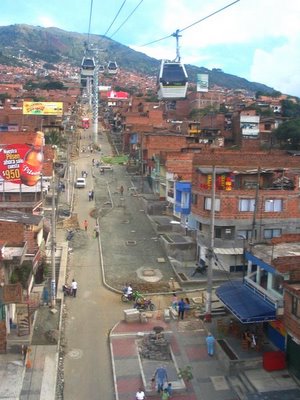
Anyhoo... If you have seen Colombian movies such as Rodrigo D: No Futuro or The Rose Vendor you will probably are aware of the extreme poverty and danger that defines the outlaying areas of the city and of the so-called 'invasion' shanty-towns perched atop the sides of the majestic mountains that surround Medellin. Yet, as the years have gone by, the residents of these neighborhoods have built up homes and, for the most part, thrown out the laminated walls that they used for a home and replaced them with cement and bricks. At the same time, violence has markedly decreased so that its no longer a danger to walk these neighborhoods' streets (paramilitary gangs, which feuded with each other and kept residents from even walking from one neighborhood to the next, still exist but are not as active; some argue that this has been mandated by higher-ups who do not want to endanger the sweet deals that President Alvaro Uribe has offered former paramilitaries who 'renounce' their ways and pledge to leave arms in exchange for full pardon for any crimes committed).
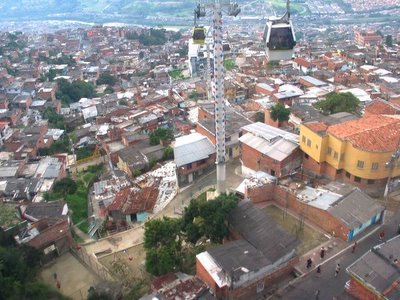
Now, while Bogota's Transmilenio has 'feeder' buses that connect Transmilenio riders with most of the city not covered by the system, Medellin has tried a more limited system of connecting Metro riders to outer boroughs. Still, their most recent effort is a stunner: Last year the Metro opened a new off-shoot which goes from the Metro line running along the Medellin river at the bottom of the valley where Medellin lies to the Santo Domingo neighborhood high up on the side of a mountain. This is done not by metro but by tramway, in small cabins that fit 6 seated and 2 standing people. The cabins are in constant motion and jumping in felt somewhat like catching a ski-lift. They have called it MetroCable.
On the day we decided to give it a try, there was a huge crowd of people, many of them tourists, who had to stand in a fast-moving line to climb on. Some tourists, afraid to step down on what used to be dangerous streets, opt to climb up the three stages, stay on the cabin and turn around all the way down. My mom, my brother, his gilrfriend, my boyfriend and I stepped out and had some coffee at a local restaurant. The experience was bizarre as I got to see part of the city I would have never thought I would ever visit and the locals still seemed a bit dazed by the fact that this massive transportation experiment had been plopped right down on their streets (and stared at tourists like us as if we were fish out of water). The impact of the MetroCable was immediately noticeable by the commercialization of the streets outside the main station. I've read that it has been one of the most successful social projects in Latin America in connecting a poor neighborhood to the rest of the city but I'm not certain that the full impact will be known until years from now (positive or negative).
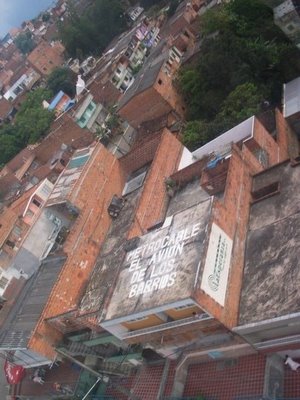
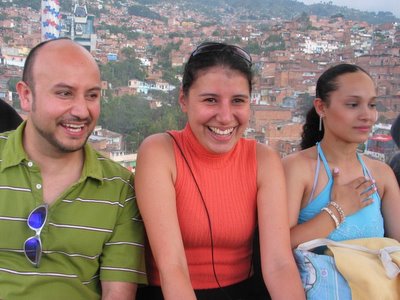
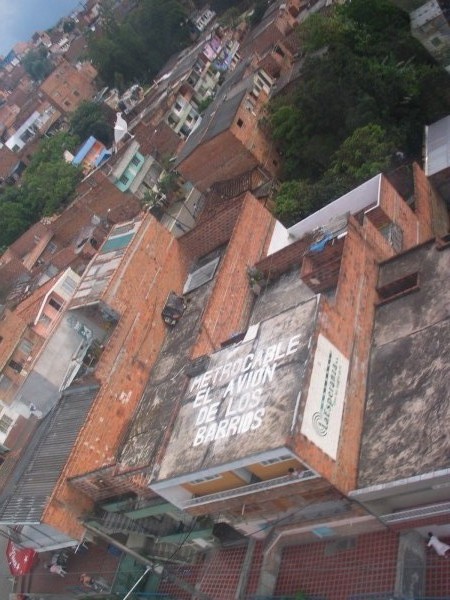
A bit scary, to say the least, was the fact that on the way up the lift seemed to stop abruptly and the cabin seemed to lurch down in two pulls. For a moment it wasn't clear that it would stop falling and some of us thought that was it for us (the bottom photo shows the relief we felt when the cabin regained altitude and started moving again). Also noteworthy was the rooftop signs that residents have begun to write in huge white letters. The sign in the top picture above reads: "METROCABLE - THE NEIGHBORHOODS' AIRPLANE"
Other roof signs, which you can check here, along with other photographs, read:
"WELCOME, WE ARE WELCOMING PEOPLE"
"AT HOME, AT PEACE, AND GLAD I FEEL - IN MY NEIGHBORHOOD"
"I AM THINKING ABOUT YOU"
"DWARFS WOULD NOT BE DWARFS IF THEY STOPPED GIVING STATURE TO THE GIANTS"

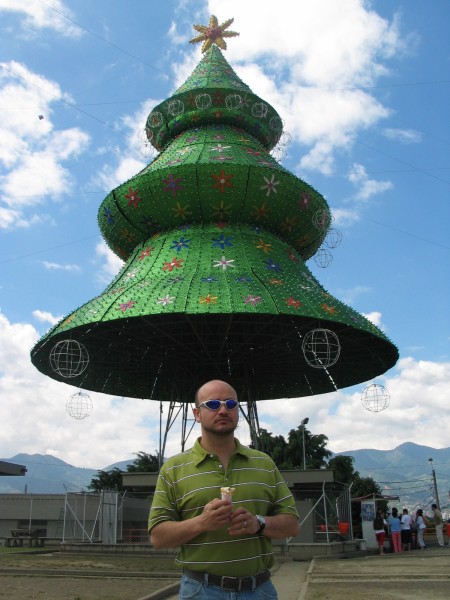
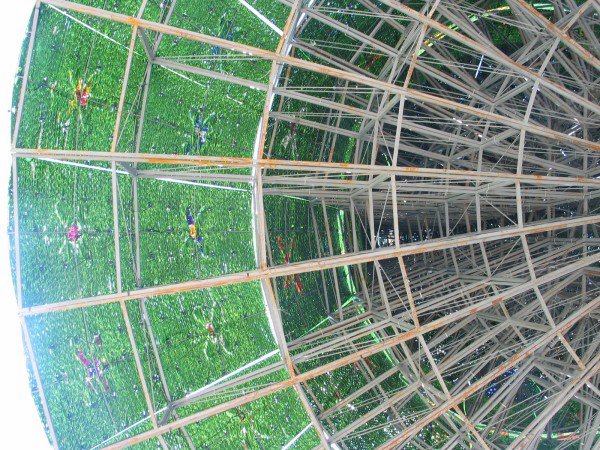
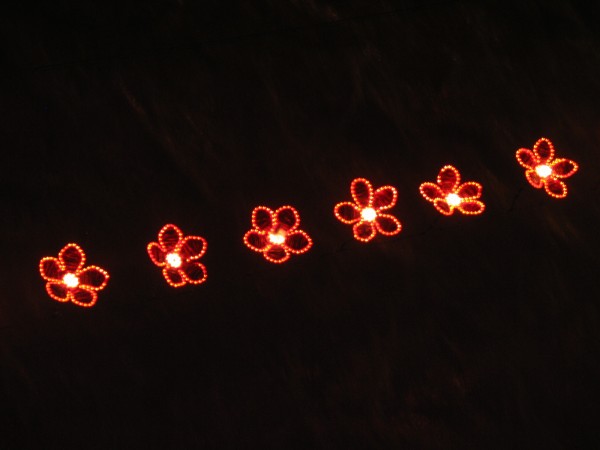
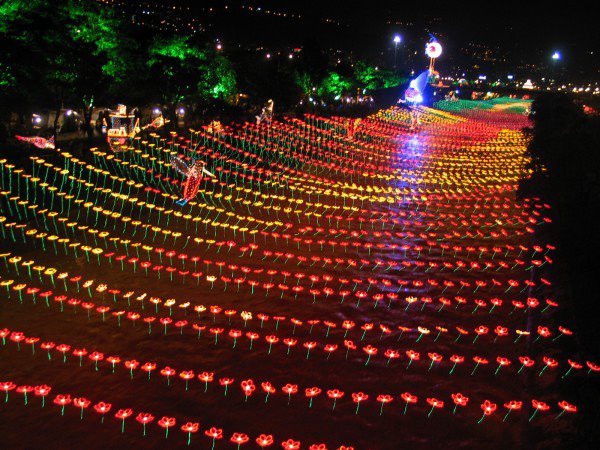
 Along with the holiday lights over the Medellin river, the Volador hill, overlooking the river and most of the city, also has this plastic Christmas tree (with a gigantic wood base) which lights up at night as well. More photos of Medellin here.
(yeah, that's the boyfriend in the top pic enjoying some ice cream)


 Today´s Miami Herald has an article on recent gay rights advances in Colombia ("Colombia is moving forward on gay rights"). It talks about the recent efforts to grant rights to same-sex couples in the nation, about the first LGBT Center in Colombia (in the Chapinero neighborhood of Bogota - I might visit before this trip is done) and about the LGBT rights advocacy organization Colombia Diversa for which I have acted as an informal advisor from time to time. Thought you might want to read.







 Posts
Posts


