Showing posts with label movies. Show all posts

Tuesday, April 12, 2011

The Passion of the Christ, Part II: Cristiada


When I think back on my years of activism in the Latino gay community I am always struck by those few unexpected moments and images that still rattle in my head and reverberate long after they have passed.

On March 14th, 2004, New York saw as huge an anti-gay rally as I have ever witnessed. Police reports put the crowd outside the Bronx Courthouse at 5,000 to 7,000 but I wouldn't be surprised if the count was much higher.

Although it's not entirely clear who masterminded the event or paid for it, hundreds of Latino churches throughout the NY/NJ/CT tri-state region ended their Sunday morning services by herding parishioners into buses and taking them to the Bronx. At the time, President George W. Bush was threatening a constitutional amendment to block same-sex marriages in the United States and rally organizers seemed all too happy to stand up and speak up in front of a huge banner that read "No to homosexual marriages, yes to President George Bush's constitutional amendment" (so much for a separation between church and state!).

I was there with 40 or 50 queer Latinos and allies hoping to counter the homophobic sentiments being sent in the name of God but there was little chance our message could reach such a huge crowd.  At the very least, we did provide an alternative message to some of the Latino media that showed up that day.

As the crowd swelled past the Courthouse grounds, across the street and into the park grounds where we stood, the police saw it fit to pen us in as a measure of protection. But I never really felt the need for the police pens nor did I feel in physical danger.  Most of the signs were of the "God made Adam for Eve, not for Steve" or the "love the sinner but hate the sin" variety and most people left us alone.

Most people.

As we stood in our safety area a woman wearing dressed in a denim jacket and wearing a baseball cap slowly made her way up the hill towards us calling us sinners and telling us we were going to hell. The detail that has stuck with me all these years later was not so much her shouting or vehemence but the fact that she was holding a copy of Mel Gibson's "The Passion of the Christ" high in the air - until someone stepped in and convinced her to walk away.

The movie had just been released three weeks earlier, and I remember finding it hilarious that someone was using a pirated version of the DVD to tell me I was going to hell.

It had also opened to boffo box office success in the United States in part due to the word-of-mouth from preview screenings at right-wing evangelical venues.

Which brings me to a new film called "Cristiada".

Probably not quite as bloody as "The Passion of the Christ" nor as well-poised to receive as large a distribution deal, this is certainly the most expensive and overtly direct attempt to appeal to that segment of the Latino evangelical community who thought "The Passion of the Christ" was a documentary.

Here is the official movie preview which was released at the end of March...


This period piece film dramatizes the Mexican Cristero War of 1926 in which Christians picked up arms to defeat a secular government who was prosecuting religious expression.  The cinematography looks amazing which is not surprising as the movie is being promoted as the most expensive film to be completely filmed in Mexico.  It also has a strong cast which includes legendary actor Peter O'Toole as well as Eva Longoria, Andy Garcia, Rubén Blades, Bruce Greenwood, Catalina Sandino Moreno and Nestor Carbonell.

Scratch deeper and you'll ask why all these fine actors got themselves involved in this project.

Director Dean Wright previously handled special effects for "Chronicles of Narnia: The Witch and the Wardrobe" which is based on a series of C.S. Lewis novels that some have taken to task for weaving Christian theology into what is essentially a children's book series.  That might not necessarily indicate religious intent but an April 8th interview with the homophobic religious site CNA certainly does ("Movie explores faith in Cristero War against forced secularism").

In the interview Wright says he became interested in the film thanks to producer Pablo José Barroso who is no stranger to religious propaganda as in the film "Guadalupe" which was also championed at CNA.

Most worrisome is the involvement of actors Eduardo Verastegüi and Karyme Lozano in the film.


Mexican born Verastegüi plays the role of a martyr Christian priest who was hung for advocating peace. He is also an actor who gained notoriety as a member of a beefcake boyband called Kairo who eventually moved to Hollywood seeking showbiz success.

He found it, initially being cast in movies like "Chasing Papi" and television episodes of "CSI: Miami" and "Charmed" but rumor is that he also fell in the hands of an English-language teacher who taught him that his "life-style" was wrong.

He soon became a rabidly anti-choice advocate and a marriage equality opponent who became the Latino face of those who backed Proposition 8 in California, which sought to ban recognition of any same-sex marriages in the state.

Speaking to Univisión as quoted by CNA (of course) Verastegüi says "It is a film with a great message of faith, love, hope, loyalty and courage, about the religious persecution in Mexico... I play a Catholic lawyer, Blessed Anacleto Gonzalez Flores, called the ‘Mexican Ghandi,’ because he was a heroic pacifist who only wanted to defend his Catholic faith without violence".

Verastegüi playing the martyr. Sigh. As for Karyme Lozano...


Oy! Another big conversion into homophobic blather. This from a woman who gladly received the 2008 crown as the queen of the San Francisco LGBT Pride Parade!

And there you go. A star-studded Latino movie that spends millions of dollars painting Christians as innocent victims in ways that the director, the producers and some of the actors surely hope it will reverberate today, particularly in Latino communities.

They are already targeting right-wing religious sites for promotion, just as Mel Gibson did a decade ago. This time. though, they are going straight for the heart of the Latino community and I'm not so sure once it finds a distributor it will receive the critical response it deserves to get, particularly in the leading Latino publications.

Tuesday, October 19, 2010

My New York: "Jackass 3D" but for real

Above: The Doug, the Bam and I
I went to see "Jackass 3D" on Sunday with my friend Doug.  He'd met some of the guys from the movie the previous night - and got a new tattoo with them - and wanted to see the movie. I wasn't so sure. I've loved the Jackass crew and the stunts they've pulled over the years but the reviews for the movie were lukewarm to bad.  Was it the best "Jackass" movie? No, but I ended laughing my ass off anyway.  Then again, I've always loved a good fart joke, so take that for what it's worth. 

Walking out of the movie, Doug realized he'd gotten a text message asking him to go hang out with the guys some more. I was invited along and ended up hanging out with Jackassers Bam Margera and Brandon Novack, a guy from the crew and some girls.

I got to quiz Bam on international politics and Novack on other stuff (I know, right?). There'd been a few rounds of drinks already by the time we joined them. We got to hear how Bam had been sized up by a guy at the urinals at a gay bar on Christopher Street earlier in the week. As gay friendly a straight guy as I've met, I tell ya. I left early, Doug stayed. Some gayish shenanigans followed. Not sure I regret leaving but it was fun hanging out.

The movie made $50 million on opening night alone. You are welcome for the money Johnny Knoxville and crew! The End.

Previously:

Tuesday, May 04, 2010

Guest post: "La Mission" and Latino Masculinities

In late March, I asked my friend Lorenzo Herrera y Lozano if I could post an essay he wrote about Ricky Martin's coming out as a guest post on this blog ("Why Ricky Martin matters", March 30, 2010). It was the first ever blog post on Blabbeando.

Today, I am posting his thoughts about the recently released movie, "La Mission".  I posted a preview of the film based on it's appearance at the 2009 Sundance Film Festival but I have yet to see the actual movie now that it's out in the theatres.

Lorenzo's essay, though, not only raises a number of interesting issues about the film, but also about representation of Latino queerness and masculinity in media.  Enjoy.

Thoughts on La Mission and the Ongoing Struggle to Broaden Notions of Latino Masculinities
by Lorenzo Herrera y Lozano

A few weeks ago I had the opportunity to see a screening of Peter Bratt’s La Mission. The screening, which was part of a limited release, was at San Francisco’s Metreon Theaters. My compañero and I, joined by two of our queer sisters of color, were lucky enough to find seats in relative proximity to each other in the sold-out space.

It was a late night screening and the vast majority of folks in the theater were people of color. In fact, I’d say most of the people there were Latina/o, with a nice mix of generations representing. The experience was unforgettable as all four of us, none of which were born and raised in San Francisco, were sitting in what seemed to be an intimate living room screening of La Mission.

We all smiled and were occasionally misty-eyed as people in the crowd, youth and adults, loudly expressed their pride in the various shots of San Francisco portrayed in the film. During the movie, I realized that this was the first time I had ever witnessed the screening of a film that embodied the geographic and cultural identities of the audience. People not only saw themselves on the big screen, they also saw the places that have shaped and witnessed them.

All in all, I found La Mission to be a beautiful film. I’m not a film critic and will leave that to those who know better. Instead, I’ll limit my thoughts on what moved me most about the movie, and those areas I wish it had gone deeper.

The relationship of Benjamin Bratt’s character, Che Rivera, and his son Jesse, played by Jeremy Ray Valdez, was sweet, raw and in many ways reflective of my own experience with my father. I was further moved by the depiction of comunidad and the ways in which we, as a village, honor our shared responsibility and opportunity to support each other and our children. Even as the father struggled with the realization of his son’s sexuality, their community intervened, loved and supported both of them in a way that rings true to my experiences of community engagement in times of family crisis. This particularly resonated with memories of how my family responded to the teenage pregnancies of cousins and to my own coming out. This isn’t to say my family, or our communities are romantic portraits reminiscent of Norman Rockwell. Rather, it is necessary to honor the fact that even in our messiness and pain, we managed to love each other in the only ways we knew how.

A question I had throughout the film was the extent to which audience members knew what the film was actually about. This was somewhat answered by the collective surprise when Jesse first kissed his boyfriend, Jordan. However, after the initial shock, people seemed to settle with the idea, though I wouldn’t suggest this was a celebration or affirmation of queerness; yet another reflection on my coming out experience.

In addition to the possibility that some in the audience were unaware of the gay theme in the story, people were very surprised when Benjamin and Peter Bratt entered the theater. The Q&A with the actor and the director was a bit all over the place. Nonetheless, I was excited to hear Peter Bratt, who was both the writer and director, talk about his process.

Something that resonated with me was Bratt’s reasoning for the gay theme in the film. To paraphrase, the writer wanted to portray Latino masculinity in its most vulnerable state. According to Bratt, the best way to expose ultimate vulnerability in a Latino who is deeply rooted in what some would argue is a stereotypical depiction of Latino maleness (dare I say machismo), would be in the realization of his son being gay. Hearing this evoked the memory of hearing my father crying inconsolably on the phone while he asked if his suspicions of my sexuality were true. The call, which ended with my father saying I was a dried-up branch of his family, exposed the darkest and scariest of both his and my vulnerability as Latino men.

I appreciate Bratt’s analysis and his courage to quite literally breakdown Latino masculinity on the big screen. However, I am saddened by the fact that he only focused on exposing the vulnerability of the father’s masculinity, and in doing so, left a gaping whole in exploring the vulnerability and possibility of the gay Latino son. Instead, the story seemed to use the son and his sexuality as a conduit, rather than truly honoring the experience of gay Latino men and our relationship with our fathers.

I was also concerned with Bratt’s reinforcement of the notion that gayness is white construct and something that only exists openly in white-defined spaces such as San Francisco’s Castro District. This is not to say that the Castro is not an important space in queer culture and one that many queer men of color, myself included, have traveled through in the formation of our identities and experience. Yet, to continue leaving gayness within the realm of whiteness speaks to our ongoing inability to claim the many facets of Latina/o sexualities and the many ways we express and manifest gender.

Furthermore, leaving gayness to be embodied by the Castro and a white boyfriend also overlooked the rich history of queer Latinidad that has long been an integral part to San Francisco’s Mission District. As a queer brown man, the LGBT Latina/o community of the Mission, including such spaces as Esta Noche, heavily shaped my identity. Horacio Roque Ramírez, a professor at UC Santa Barbara, has done extensive work on the LGBT Latina/o community of La Misión and has done an excellent job in honoring the legacies of organizing and community building that has taken place over several decades.

To be clear, I am not arguing against depictions of the Castro or against mixed-race relationships. Rather, I ask that we think about what continues to stand in our way of fully acknowledging that LGBT Latinidad can and has long existed outside of the confines and direct influence of white LGBTness. Perhaps acknowledging that queerness can be just as inherently Latina/o as it is to white communities is a vulnerability we are not prepared to experience.

---

Related: For local showings of "La Mission" try an online movie ticket sale site such as Fandango.

About Lorenzo Herrera y Lozano: A Queer Xicano writer, Lorenzo Herrera y Lozano is the author of the Lambda Literary Award-nominated  Santo de la Pata Alzada: Poems from the Queer/Xicano/Positive Pen (Evelyn Street Press, 2005).  He is also the editor of Queer Codex: Chile Love (allgo/Evelyn Street Press, 2004), an anthology of visual and literary works by queer men of color from across the U.S.; and, Queer Codex: Rooted (allgo/Evelyn Street Press, 2008), a mix-genre anthology by queer women and trans-identified writers and visual artists. His work also appears in  Mariposas: A Modern Anthology of Queer Latino Poetry (Floricanto Press, 2008), edited by Emanuel Xavier. A native born, raised and perpetually residing in Aztlán, Lorenzo was born in San José, CA, raised in Estación Adela, Chihuahua, and schooled in Austin, Tejas. Along with his compañero of nine years, Lorenzo now makes home in San Francisco, CA. 

Oh, and he also blogs, sometimes, at Hairspray & Fideo. Oh, and he has a personal website.

Sunday, February 01, 2009

At Sundance 2009: La Mission


The 2009 Sundance Film Festival ended last weekend and I am certainly intrigued by the Grand Jury Prize winner "Push" (not to be confused with the lame looking sci-fi flick "Push" coming out this Friday, which looks like a re-tread of the dismal 2008 sci-fi flick "Jumper").

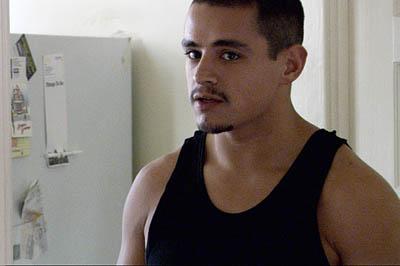
But, even if it didn't win an award, I've also been intrigued by another flick in competition called "La Mission". Benjamin Bratt plays Ché Rivera, a bus driver with a violent streak and a passion for lowrider cars, who discovers that his adored son is gay.

Interestingly, of the very few US films that have tackled gay themes in the Latino community, it's striking that "La Mission", "Quinceañera" - which won the Grand Jury prize at Sundance in 2006 - and "On the Down Low", are all set in Mexican-American communities. Then again, the dominant Latino communities in the cities in which they are set (San Francisco, Los Angeles and Chicago, respectively) is the Mexican-American community.

Oh, and openly gay former NBA star John Amaechi is listed as a Consulting Producer. Oh! And one more aside: I love the fact that actor Jesse Borrego also has a part in this film. Speaking of groundbreaking roles when it comes our communities represented on the screen check him out as Alexis, a transgender woman, in this "I Like It Like That" clip. Better yet, buy the movie. It's great!

Reviews so far are not bad but not great either. Variety calls the script "a little obvious" but says that the direction and the actors are "pleasingly naturalistic", with Bratt's charisma "at full wattage." The Hollywood Reporter says that the film is a "heartfelt production" which "offers a compelling insider's view of a culture foreign to most moviegoers" and also make note of Bratt's "charismatic performance", but calls the direction "a bit heavy handed". Both publications say that the movie will probably find at home on cable rather than at movie screens.

I for one hope to have the opportunity to see it on the big screen.

Related:
MUST-WATCH CLIPS: Clips from an interesting interview with producers an cast set up at Sundance by GLAAD in which they talk about homophobia and machismo in the Latino community, how they tie to misogyny, Prop. 8 and Latinos, and the film itself. Director Peter Bratt's comments are particularly insightful and you can clearly feel just how much heart went into this film.

Part 1:

Part 2:

Part 3:

Part 4:

Part 5:

Part 6:

Part 7:

Friday, April 04, 2008

Film: "Tal Como Somos" to premiere at 24th Annual Chicago Film Festival


I already told you about the Puerto Rican thriller "Las Dos Caras de Jano" premiering at the 24th Chicago Latino Film Festival (which begins today).

Turns out there is a second gay-themed festival entry and this time it's a documentary.


According to press materials, "
Tal Como Somos (Just as We Are)" from Juneteenth Productions "shares the realities of living within a culture where daily life means being torn between love as son, brother, father, friend and stigma, or even exclusion, for being different."

The trailer (above) betrays a certain "educational" film tone which is not surprising since the production company also makes educational videos and media such as "Tracking Syphilis: Countdown to Elimination" and "Destructive Force: Hip Hop Imagery in Advertising."

"Tal Como Somos (Just as We Are)" is featured on their page under a link that reads "Latinos Fighting Stigma" which makes me think that the framing of the topic was there before the film was produced.

Without having seen the film and without wanting to take anything from the experiences of those interviewed for the documentary, I will say that - personally - this sort of message framing usually rubs me the wrong way and, in other similar films that I have seen, takes away from the personal experiences portrayed in these films by not letting those experiences speak for themselves.

Then again my friend Dusty Araujo is in it! So I'll give the film some extra points [h/t: LifeLube].

UPDATE: ABC7 Chicago says that there is actually a gay and lesbian track at the film festival including films from Spain (Barcelona), Mexico (Quemar las Naves/Burn the Bridges), Puerto Rico (Manuel & Manuela - see trailer below) and Chicago (Just as We Are/Tal como Somos).

Friday, March 28, 2008

Film: "Las Dos Caras de Jano" to premiere at 24th Annual Chicago Film Festival

Las Dos Caras de Jano ["The Two Faces of Janus"], a thriller produced and filmed in Puerto Rico based on a novel by Wilfredo Mattos Cintron, will be premiering on April 5th as an official selection of the 24th Annual Chicago Latino Film Festival.

It's the second time that Puerto Rican actor Modesto Lacén (PBS's My Family and Dirty Dancing 2: Havana Nights) has played the role of detective Isabelo Andújar after Desamores which was released in 2005 and brought a modest review from Variety. Both films were directed by Edmundo H. Rodriguez.

Of interest is the fact that the basic plot of the new film revolves
around a serial killer who is targeting closeted gay men in the island. When an acquaintance of Detective Andújar is murdered soon after he comes out to him, the detective races to catch the killer in order to prove that the man's wife is not his murderer.

According to press materials, "The investigation uncovers prejudices against gays in Puerto Rico, the shaky ties between college buddies, and countless other truths."

Mattos Cintron is known as a political writer who has advocated for Puerto Rican independence and been part of peace and justice movements in the Caribbean and, in these novels, he seems to be writing in the vein of Walter Mosley and his Easy Rawlings detective series, particularly with a black detective as the protagonist. These issues seem to have been preserved by script writer Gilberto A. Rodriguez who adapted both novels for the screen.

This is why I am intrigued about how they tackle issues relating to homosexuality, bisexuality, being closeted and racism in a Puerto Rican community that still has deep pockets of homophobia combined with machismo.


"Las Dos Caras de Jano" has also been submitted for consideration at the New York International Latino Film Festival set for July of 2008.

You can check the Director's MySpace page here or a Spanish language movie trailer below.

UPDATE 1: The film will also be shown as part of the Havana Film Festival New York on April 14th at the School of Social Work of Hunter College and on April 16th at the Quad Cinema. More info here.

UPDATE 2: J's got a review of the film over at his blog ("Review: Las Dos Caras de Jano / Two Faces of Janus," April 7, 2008)

Sunday, January 13, 2008

My New York: Movies and the destruction of Manhattan

Sure, I like a good ol' destruction of the world movie just like everyone else but when posters for J.J. Abrams' Cloverfield began to appear all over subway station walls and in the streets I admit I gasped a bit.

It wasn't the image of a beheaded Statue of Liberty that got me it was the - shameless? - way that the promotional materials show a decimated ground zero at the exact site where the Twin Towers used to stand (a clip available at the movie's official site shows that the film also plays with the awful imagery of that morning as well: Buildings collapsing on themselves, horrified crowds running away from looming clouds of smoke and debris, people rushing into deli stores just as the clouds are about to envelop them - scenes that could have come straight from Jules and Gedeon Naudet's extraordinary
"9/11" documentary ).

Not that this is fresh commentary: The New York Daily News had an article a couple of days ago just on this and the New York Times also looked at "The Irrisistible Urge to Destroy New York on the Screen."

I'm not sure how these images play outside New York and it wouldn't surprise me if the movie plays better elsewhere than in Manhattan. But I'm pretty sure that I'm not the only one who is reacting this way to the posters.

For the past 15 years I have worked in midtown Manhattan and I remember often looking down at the Twin Towers through the city's cement canyons almost every morning. Since September 11th, of course, those towers are no longer there and what remains - as a point of reference - are the two shorter World Financial Center towers that served as their "skirt," if you will (you can see both in the picture on the right and they are featured prominently in Cloverfield's poster as well).

It sometimes makes me sad to feel that I no longer remember just how much higher the towers rose above them or their exact relation to them.


Immediately after the attacks, it would have been impossible to think that Manhattan would have seen as healthy a real estate market as it has over the last few years. And, though it's great that the city has been able to avoid a deep economic recession, one of the unfortunate things that has happened is the proliferation of functional but architecturally bland apartment towers. They have certainly changed the Manhattan skyline for the worst.


I plan to see the movie. I know the difference between reality and entertainment and probably will enjoy it despite the fact that some of the imagery will probably have deep ressonance for reasons other than entertainment. I know of people who have stayed away from other movies that have addressed the day's events in fictionalized form and I respect that. But I have a feeling that I'll feel sadder down the line - long after the movie has opened and closed - when I look down Sixth Avenue and see that new high-rise obscuring the surviving World Financial Center towers.

Not necessarily mass destruction but a reminder that New York is no longer what it used to be.

Thursday, November 08, 2007

After Elton: Breakthrough Black and Latino Roles on the Big Screen

A few days ago one of my favorite bloggers, Rod McCullom - who writes for The Advocate and blogs at Rod2.0 and at The Huffington Post - contacted me to ask if I'd like to comment on Latino gay roles in American film for Logo Online's After Elton. I immediately said yes but then panicked when I actually didn't remember that many representations of Latino gay life in films produced in the United States.

As a result I sent a long and rambling stream-of-consciousness answer (always an iffy proposition because you just don't know what will be quoted). Good thing though! The article has been posted online and I think I can breathe easier. You can make up your own mind at "Breakthrough Black and Latino [Gay] Roles on the Big Screen" (After Elton, Sept. 7, 2007).

Consider this, then, the After Elton extra (or stuff that didn't make the final cut):

El Blabbeador on Hank Azaria in The Birdcage: "I mean, take the Hank Azaria gay Latino bimbo character out of The Birdcage and not much would be missed. The movie, though, would probably still be just as bad" (writer Johnny Diaz makes almost the same point in the article).

El Blabbeador on Epitafios and Testosterone (that's actor Julio Chávez pictured above as ex-detective Renzo Márquez in Epitafios): "Then again you still have the case of productions such as the HBO Latino miniseries from Argentina, Epitafios - filmed more like a movie than a television show - that still portray gays as unhinged psychotic cross-dressing serial killers. Ugh. And the less said about the ludicrous cross-country lovers revenge flick Testosterone, also filmed in Argentina, the better."

El Blabbeador on the film version of Love! Valor! Compassion!: "As much as I like some of Terrence McNally's work, there's something that has always immediately turned me off about storylines where the Latino gay character just serves as the object of lust and conflict of a bunch of white gay men. I'm sure it represents certain milieus in some gay circles, but my idea of entertainment is not going to see a film where a gay Latino character is simply objectified based on the character's ethnicity."

El Blabbeador on I Like It Like That: "A personal favorite remains a little seen film depicting the life of a Puerto Rican family in the Bronx called I Like It Like That. Even though the character in question is not a gay man but a transgender woman, it still remains one of the best movies about Latino life in the United States that explores issues of sexuality and gender from a Latino perspective."

El Blabbeador on the future: "Right now I have my eye on 'Elliot Loves' which is currently in production and apparently tells the story of a gay Dominican kid growing up on the streets of Washington Heights - it's being produced by a production company owned by gay actors Chad Allen and Robert Gant - and directed by a Dominican director."

Like Epitafios, I also touched on television series like My So Called Life with Wilson Cruz and Noah's Ark. But the focus was specifically on films so there you go.

An aside, thanks to Rod for calling Blabbeando "The top destination for Latino gay and lesbian news from the United States, Latin America and the Caribbean" in the piece. Not sure if we are quite that but it always is good to know that the blog is appreciated (he has more here).

Thursday, September 27, 2007

Love will tear us appart, again

The last time I recommended a movie ("Once"), some people let me know that they had taken a chance on it and greatly enjoyed it. So excuse me for plugging another flick but this one looks to be too good to pass - even if I have yet to see it (I mean, to some of us Joy Division and New Order are just godly but that doesn't mean film will do them justice).

In any case, here comes "Control" - an Anton Corbijn film that just looks stunning which is not surprising since he's mostly known for his emblematic images of Depeche Mode and U2 (circa "The Joshua Tree").

"Control" opens first in the UK on October 5th and the following week it opens up in the United States in a limited run. Let's hope it's as great as it promises to be.

Tuesday, August 01, 2006

My Super Sweet Fifteen

Ok, so I'll confess that the only reason I wanna see Quinceañera (which opens on Friday in New York and Los Angeles after getting some good and some not so good reviews in the festival circuit) is Jesse Garcia (pictured) playing what he calls a "gay cholo" (though we much prefer the term vato).

Call me a softie (or superficial), but I always fall for those cholo thug to vato thug love stories, as stereotypical as they may be (considering that the gringo producers wanted to make a movie of what they saw outside their comfy apartment windows near Echo Park in Los Angeles).

Now Michael Musto of the Village Voice reveals in tomorrow's issue that the movie was actually made with gay bareback porn money (the scandal!) and captures the film stars' horrified reaction.

Sure enough, you Google the facts and get the porn to Oscar-glory-bound story (pending Oscar glory). Any thoughts?

Saturday, April 08, 2006

Elliot Loves: A Dominican-American boy comes of age in New York

Yesterday, The Hollywood Reporter said that Mythgarden and Funny Boy Films are teaming up to produce a gay coming-of-age story called "Elliot Loves" (Funny Boy Films has previously released "The Night Larry Kramer Kissed Me," "Later Days" and "Adam & Steve" while Mythgarden counts Queer as Folk's Robert Gant and Chad Allen as partners).

What might set aside this film from all those other gay coming of age films is that it takes a look at the Dominican community in New York and also has a Dominican-born man at the helm.

According to the Reporter, the film "chronicles two stages of a Dominican-American youth's life - first as a 9-year old struggling to build a relationship with his young mother - then as a 21-year old looking for love in New York" The article also says that it will be the full-feature directorial debut for Terracino (pictured), a Dominican-born filmmaker, who might be best known a short film called "My Polish Waiter" which is featured in "The Best of Boys in Love." He also wrote the screenplay.

It will be a while until it reaches the screen though as principal photography is only slated to begin in New York this July.

[Photo credit: Taken from the Film Festival Today's look at the July 2005 New York International Film Festival]

Monday, February 20, 2006

Around the neighborhood: Cigar Bollywood


It's been a while since I spoke about the neighborhood so allow me to comment on a trend that seems to have come and gone quickly. Jackson Heights is home to one of the most diverse communities in the world and that is one of the big reasons why I love living here. One of the largest is the Indian community which is why the neighborhood is sometimes called "Little India." So if you walk down 74th Street off Roosevelt Avenue you will probably see some of the best Indian food restaurants in the city, glittering jewelry shops, Indian-owned and Indian-staffed supermarkets and, of course, a dozen Indian movie DVD and VHS shops carrying the latest Bollywood blockbusters. Then there's The Eagle movie palace on 37th Road which runs the biggest blockbusters from India, often on the same day that the film opens there (never mind that when I first got to Jackson Heights in the 1990's, the theatre used to be called The Earle and used to run straight porn films).

Anyhoo - Not a cigarette smoker myself but someone who enjoys a cigar once in a while, I have always been struck by what seems to be Indian smoker's allegiance to Dunhill cigarettes or Silk Cuts. Sure, they smell better than any menthol cigarettes such as Newport (which unfortunately seems to be the smoke of choice among city Latinos and blacks) but don't they carry some colonial British baggage? Also, tell all those 'NASCAR dad' political prognosticators that here is where the Skoal and Coppenhahgen dip tobacco cans truly sell out.

In any case, last year I started noticing that some of the Bollywood film posters began to feature some cigar imagery used to portray either a rugged hero or a bad guy, as cigars have been used in popular culture in the United States. And I was fascinated by the fact that these movies seemed to be adopting some of the same language used by US blockbusters (not necessarily a good thing).

One of these films, "Family: Ties of Blood," used such imagery in a "Sopranos" kinda way but aparently drew the wrath of anti-smoking advocates in India according to this BBC report. Now, one of India's best known and loved actors, Amitabh Bachchan (known as Mr. B), is embroiled in the fracas and India is involved in a discussion on whether to ban any depiction of smoking from film screens. Mr. B has apologized for smoking a cigar during the promo shoots of the movie and said that he was not a smoker himself. Others feel that eliminating any depiction of smoking in a film is mere censorship.

The movie, since released, did not get great reviews, but the uproar that followed its release in India might mean the end of the cigar trend in Bollywood..

Friday, February 17, 2006

Yey! Updates: Wilson Cruz, Laisa Reyes, No Love, La Trevi

When Rod 2.0 alerted us to stunningly low job approval ratings for President Bush in the aftermath of the hurricaine (Oct. 13, 2005), we were afraid to ask what the margin of error was. Not necessarily on the same topic, and a definitely happier alert, Rod says that he has interviewed gay Latino hottie Wilson Cruz for the next issue of Clik. We'll be looking for it in the newstands. Kudos ro Rod for landing the interview.

Regarding Colombia: Transgender Diva (Jan. 13, 2006), perhaps the most visited post in this blog, last week I actually had the opportunity to talk to
Endry Cardeño (pictured above), the transgender woman who plays Laisa Reyes in the popular Colombian soap opera "Los Reyes." I had been asked to participate in a morning radio show broadcasting from Bogota on how coming out might be different in the United States than in my home country of Colombia. I knew that a good friend of mine, German Rincon - an amazing gay rights advocate and attorney - would be amongst the guests but, to my huge surprise, Endry was also invited. I took the oportunity to congratulate her on the soap and the work she was doing to bring down stereotypes about transgender people in Colombia. Yes, I can get a bit star-struck sometimes. Then again, I know people who are making their families tape "Los Reyes" so they can see it here.

Regarding A Year Without Love (Feb. 7, 2006), I have yet to see the film since it opened in New York but Gary Kramer at Gay City News gives it a rave review.

Regarding La Trevi en New York at Splash on March 7, both Syed and Elena Mary have taken me to task for daring to say that I am not a big fan of Gloria Trevi's music. She is, after all, the "Mexican Madonna!" I guess I'll have to atone for my sins at Splash when I go see her live. The night closes a mini-tour of gay bars throughout the United States. The Miami Herald filed this story on the eve of her Feb. 14th performance in Miami Beach. In the article, the tour promoter says: "The gay community has always believed in her, a lot of them understand when you're wrongly accused because of sexual behavior. When she came out of it all triumphantly it helped her."

La Trevi says: "I'm so grateful and proud [to have gay fans]. When I was in trouble, the gays didn't abandon me."

Let's see how the night at Splash goes.

Tuesday, February 07, 2006

A Year Without Love

Talking about e-mail lists from Argentina, about a year ago I found myself in the middle of a discussion about the veracity and realism of "Un Año Sin Amor," a film from Argentina based on Pablo Perez' published diaries of the same name. What was bizarre was that the discussion included several men who were the real life counterparts to those mentioned in the diary and the movie, including "The Sheriff." The consensus was that the film necessarily used some dramatic liberties and that leather life in Buenos Aires in the late 1990's was not as extensive as the film shows, but that the film got other things right.

The diary - and film - tells of the twelve months that follow Pablo's HIV positive diagnosis, his prolonged depression, his escape into anonymous sex and his rebirth - of sorts - when he is adopted by an extended family of gay men who practice sado-masochism in the underground clubs of Buenos Aires.

Dubbed "A Year Without Love," the film opens in New York this Friday and is already getting some good reviews States-side. I have yet to see it but it will be interesting to see that side of Argentina gay culture represented on screen.

Thursday, February 02, 2006

Monday, January 30, 2006

Qinceañera queerness at Sundance Film Fest

Qinceañera has claimed both the jury and audience prizes at this year's Sundance Film Festival. The film, a coming of age story that takes place in the heavily Latino neighborhood of Echo Park, features a cast of newcomers getting some great attention for their acting. Among them is Jesse Garcia who plays Carlos (pictured), the lead character's gay cousin, whose father has kicked him out for being gay but leads a rough life which includes flirtations with local gangs (aparently it was a very gay year at Sundance).

Though some are comparing the film to "made-for-cable forgiveness melodramas of the Lifetime Channel and Oxygen Network variety," we hope that it reaches New York movie screens so we can judge by ourselves.

It is not the first time that an independent flick explores issues related to Latino thugness and gay identity. In 2003, Tadeo Garcia explored these themes more directly in "On the Down-Low" which was based in the Southside of Chicago instead of Los Angeles. My organization co-sponsored a presentation of that particular film at the 16th New York City LGBT Film Festival, NewFest, where it won Best US Feature honors.

What the Village Voice says about the film:


Wan and cutesy, Richard Glatzer and Wash Westmoreland's
QUINCEAÑERA is most notable for making explicit the slumming subtext of many an earnest Sundance crowd-pleaser. Shot near the directors' own Echo Park residence and focused largely on the neighborhood's Latino community (in particular a newly out, tough gay boy and his possibly immaculately pregnant cousin), it's less about culture-clash affirmation than gentrifiers' guilt.